


Loading case study
Loading case study
// case study
A spatial 3D command center - live Monte Carlo SaaS scenarios through a Python engine, not client-side fake math.
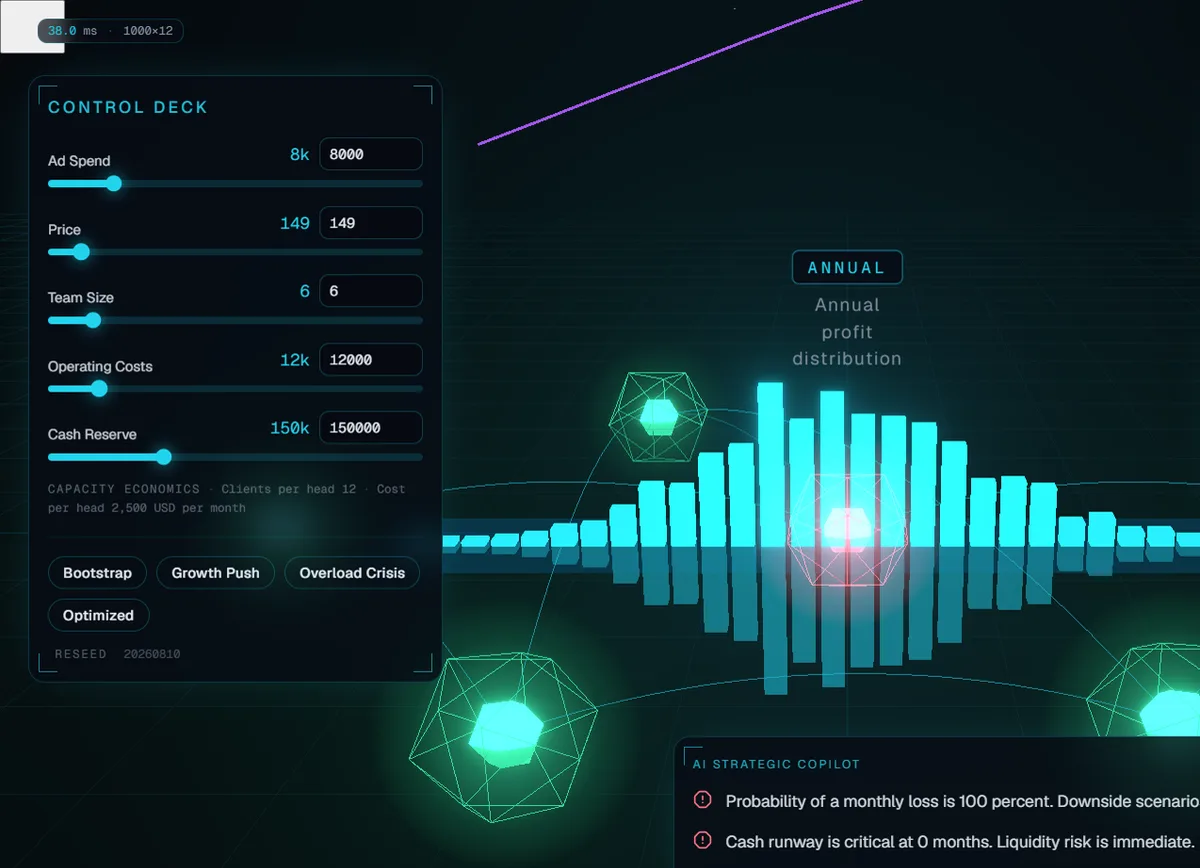
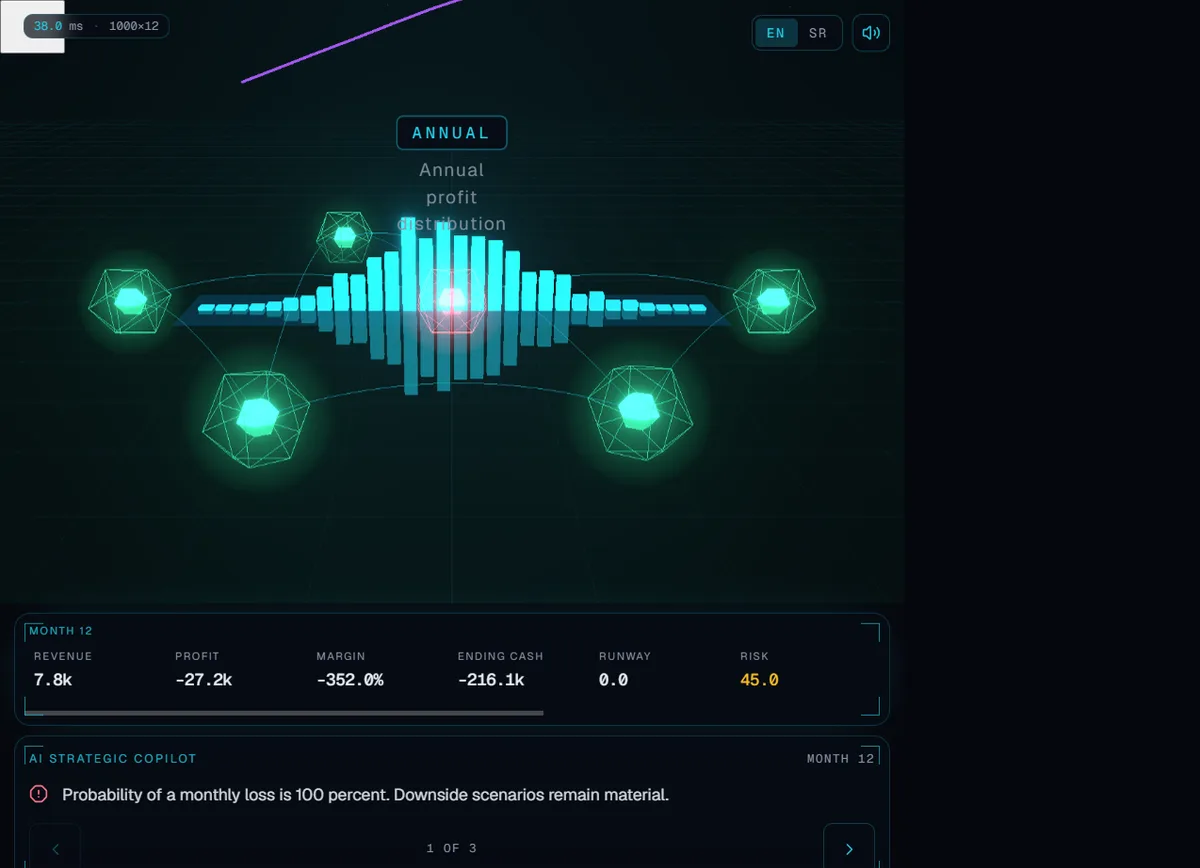
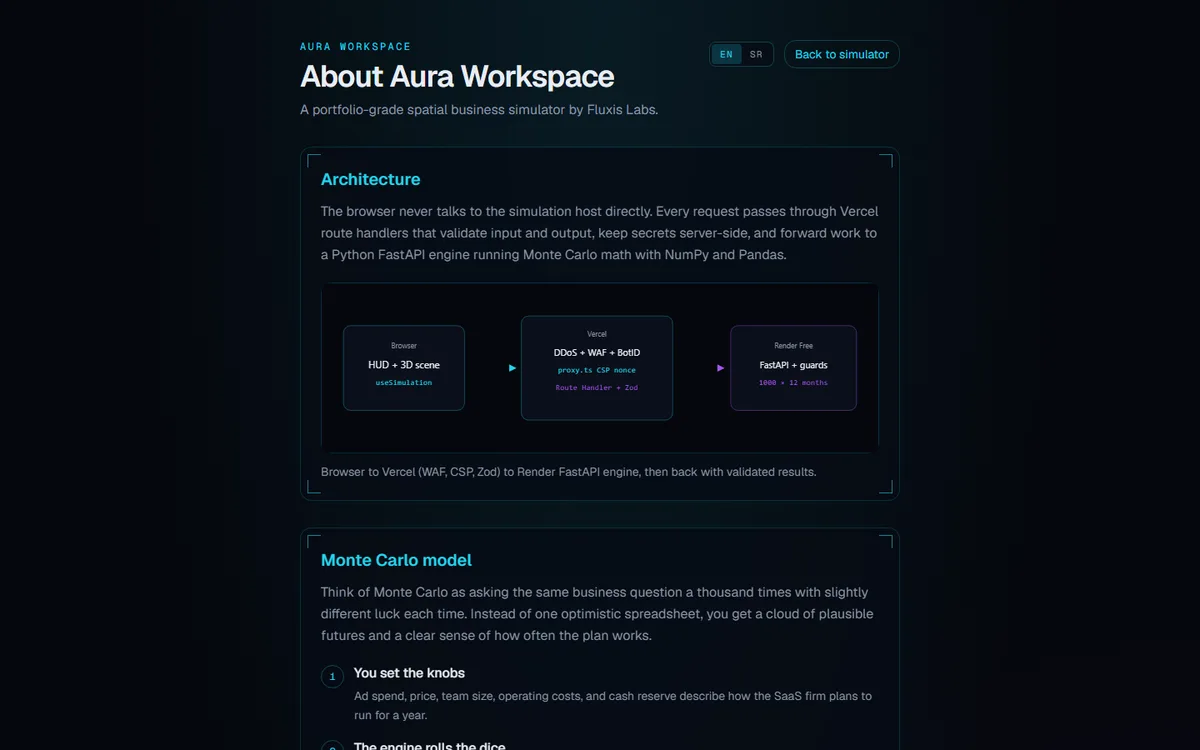
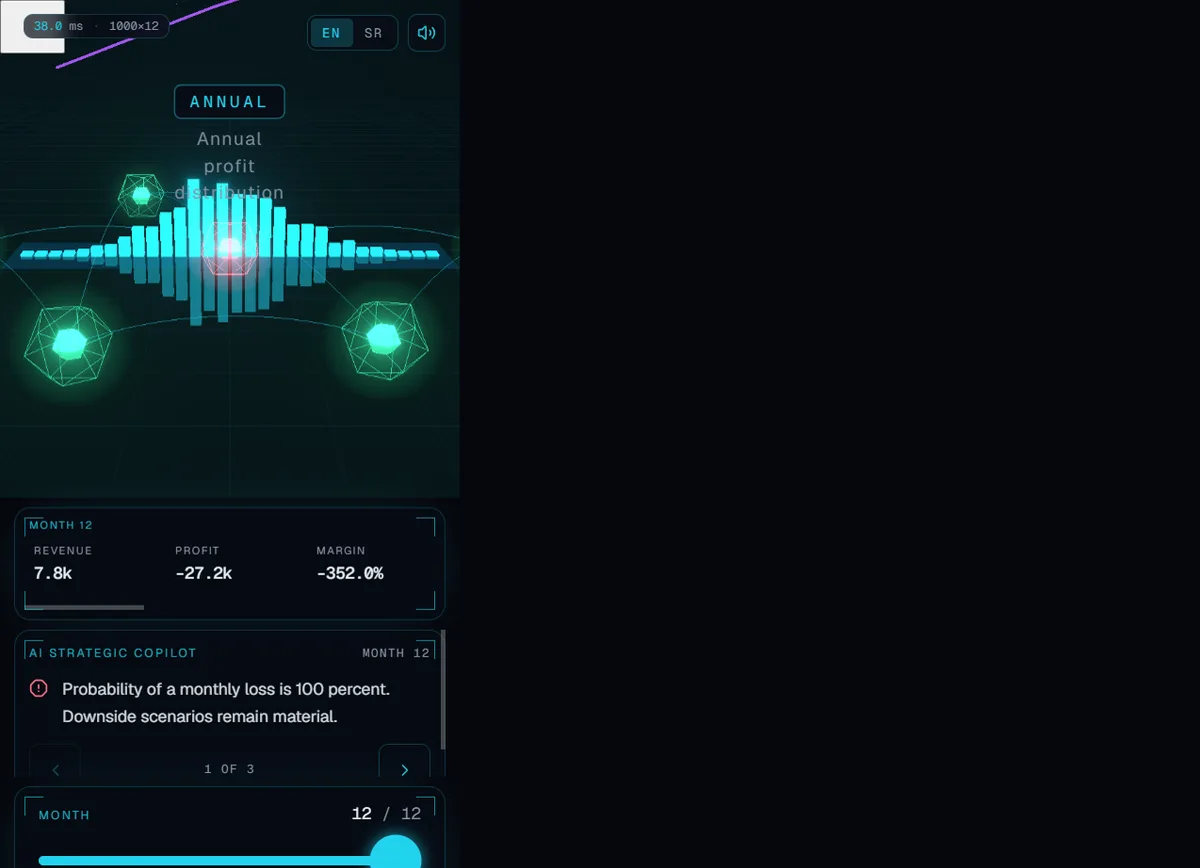
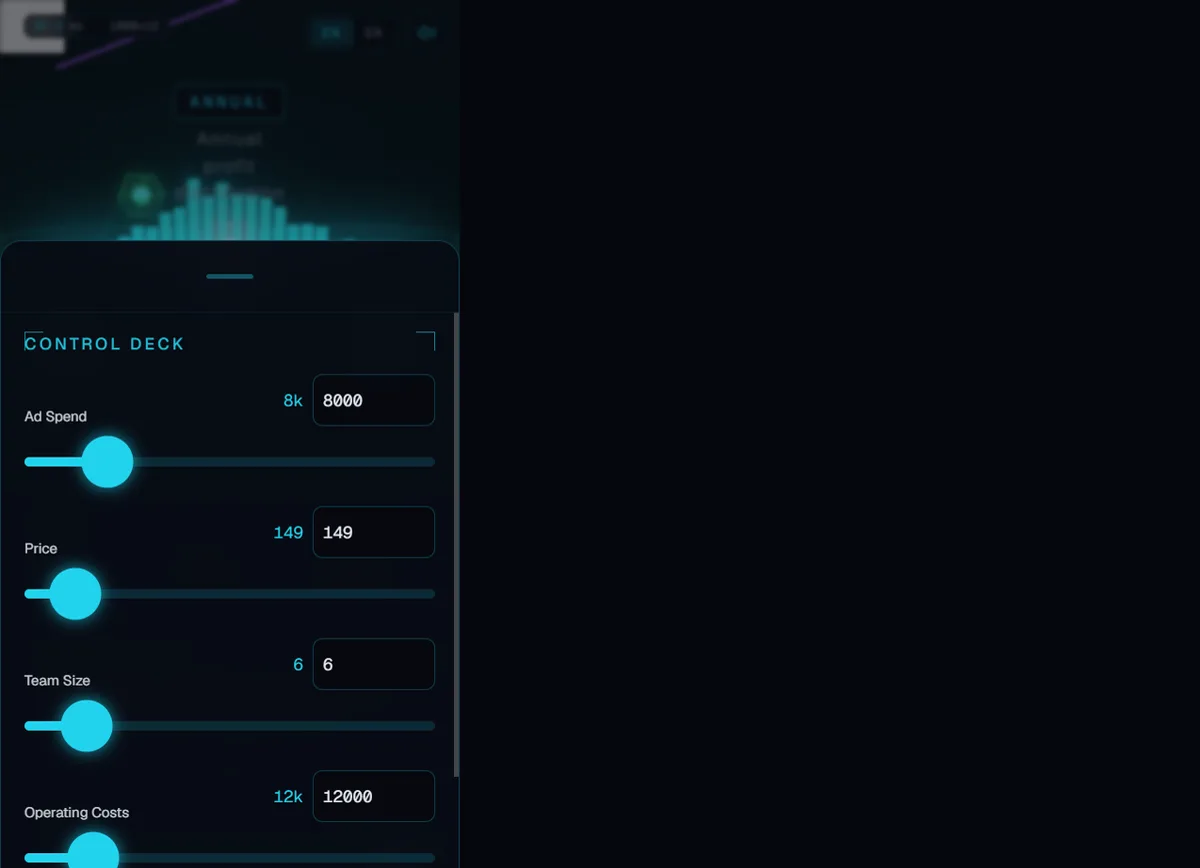
Most portfolio dashboards either fake numbers in the browser or hide a thin API behind pretty charts. We needed a public exhibit that proves three skills at once - nontrivial Python simulation, WebGL craft, and production-grade security - without paid infrastructure or invented fallback math.
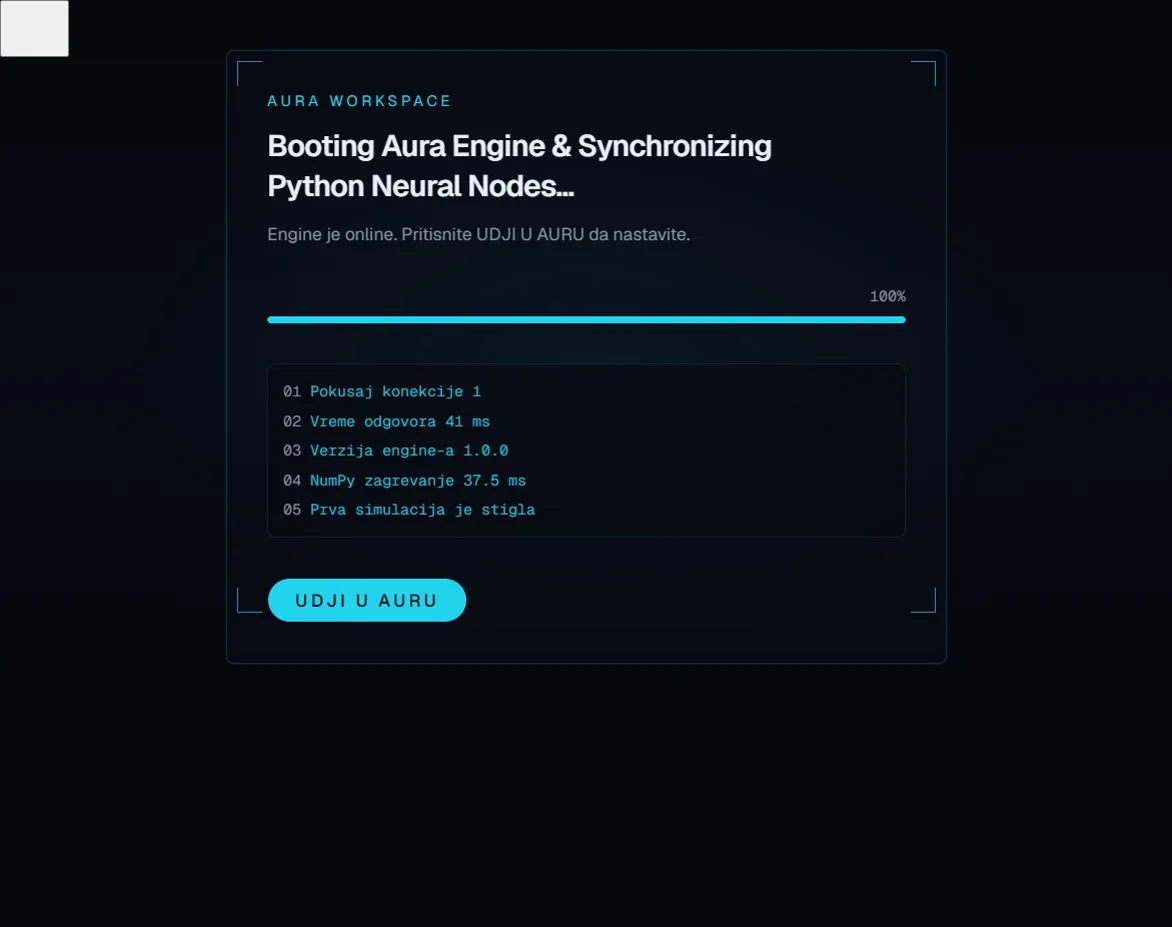
Every slider change hits a Vercel Route Handler (Zod in/out, server-only secret), then a FastAPI engine on Render that runs 1000 Monte Carlo iterations across 12 months. The browser never talks to Render, never computes business numbers, and never receives sentences - only insight codes that EN/SR dictionaries localize. The 3D scene (React Three Fiber) redraws seven nodes from those server results alone. A boot screen waits on a real engine wake before ENTER AURA unlocks.
The exhibit is live at fluxis-labs-aura-workspace.vercel.app with a public MIT repo. Quality gate on every push: ruff + pytest + pip-audit on Python, and tsc + ESLint + Vitest + Next.js build on Node. Hosting stays at 0 USD (Vercel + Render Free). Shareable URLs freeze slider state so a LinkedIn demo can open Overload Crisis from a pasted link.
Next project
KombiGM